
Pocket’s Death
A few years ago, my chicken hatched a few eggs. My husband went outside and heard peeping while I wasn’t home. He found the chick on the coop floor. Not knowing who it belonged to or where it came from, he stuck it in his pocket to keep it warm. When I got home, mid-conversation, he reached into his pocket and pulled out a chick, saying, “Oh yeah, I found this earlier.” So we named her Pocket. She was an olive egger who laid well for a couple of years. Last year, I noticed she wasn’t laying as often. I had a few chickens that laid the same color eggs, so I wasn’t sure if she had stopped completely.
Two months ago, I found Pocket standing with her backside pointed toward the ground, her eyes closed, and limited movement. I wondered if she was egg-bound, but after further investigation, including palpation of her abdomen, I didn’t feel an egg. Later that day, she was acting normally again, so I didn’t think much of it. Her droppings were normal, she was eating and drinking, and she was out foraging with her flock. Over the following days, I noticed the same typical chicken behavior.
Yesterday, I found her in a troubling condition again. She was in the coop, acting off, standing like a penguin with her eyes closed. The penguin stance is common in chickens dealing with ailments such as salpingitis, egg binding, peritonitis, reproductive tumors, water belly (ascites), and internal laying. I contacted Dr. Blayne Mosizech (The Poultry Doc), and we discussed symptoms and procedures. I could feel a mass inside her abdomen, but it didn’t feel like an egg. She also had some fluid buildup. I had an hour-long meeting to attend, and when I came home to assess her, she had already passed.
Feeling guilty that it could have been egg binding and that I hadn’t acted fast enough, I decided an at-home necropsy was necessary. I wanted to know for sure what she was dealing with. (Trigger warning: graphic images can be found at the bottom of this page. Don’t scroll down if you don’t want to see them.)
To perform this examination, I used a scalpel, gloves, and a plastic trash bag to contain the mess. A strong stomach is needed for a necropsy, especially when it is performed on a pet like Pocket. I cut through the layers of skin to reveal the contents of her reproductive system. I didn’t have to investigate far, as a large mass was immediately apparent. I recorded video and pictures to consult with the doctor, and his suspicion matched mine. Pocket had a large tumor. Tumors like this can rupture or hemorrhage, which can cause sudden death. I am relieved to know I could not have prevented her passing, but I am sad that her life has ended. Performing a necropsy also gave me peace of mind, knowing that the rest of my flock is safe.
There are places you can send chickens to if you want to pay for a necropsy. Your vet or local animal extension office should be able to direct you. In this case, I suspected it would be easy to find, but if it were something like an unknown virus, neurological problem, or infection, I would consider a professional necropsy.
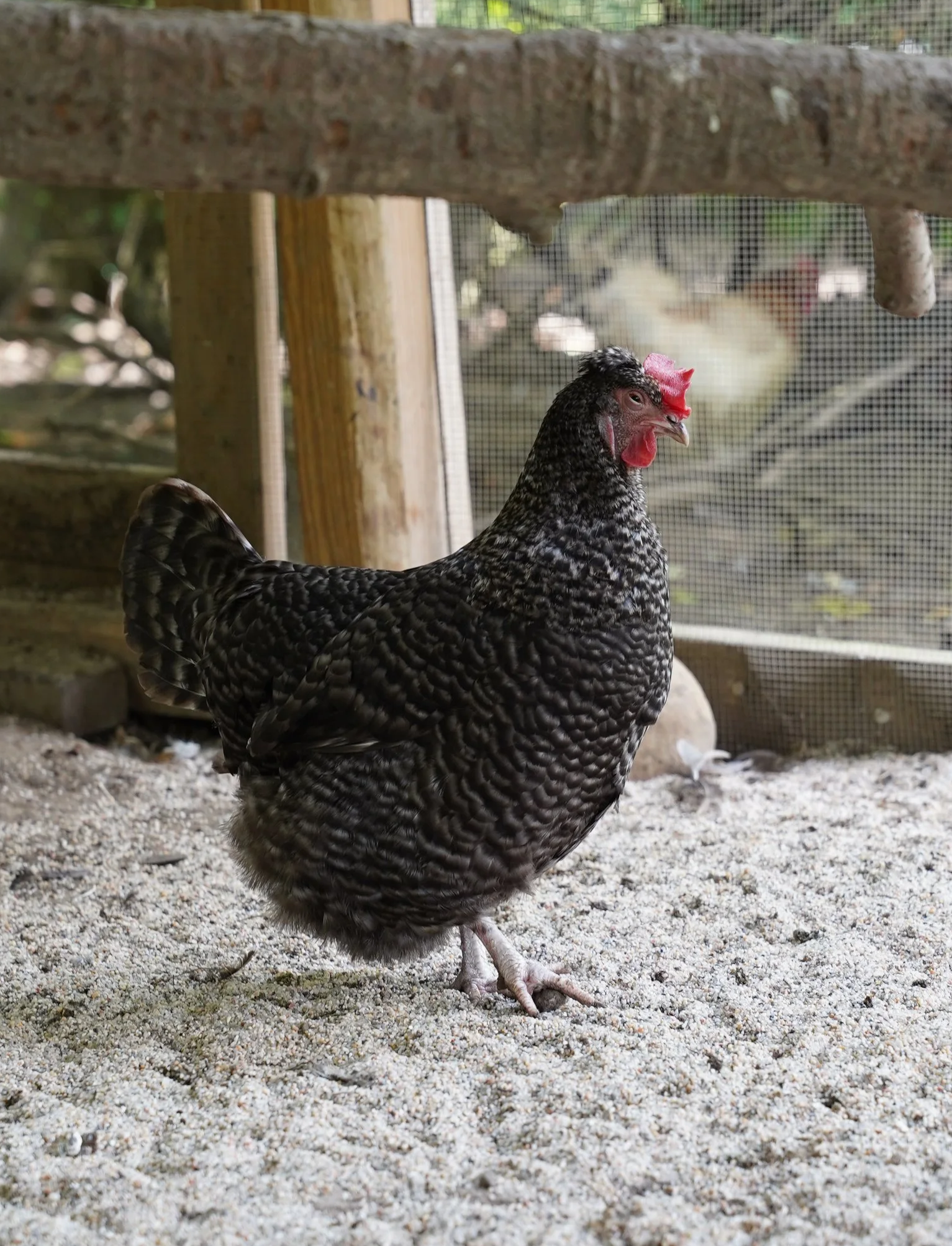
Pocket the first time I found her not feeling well.
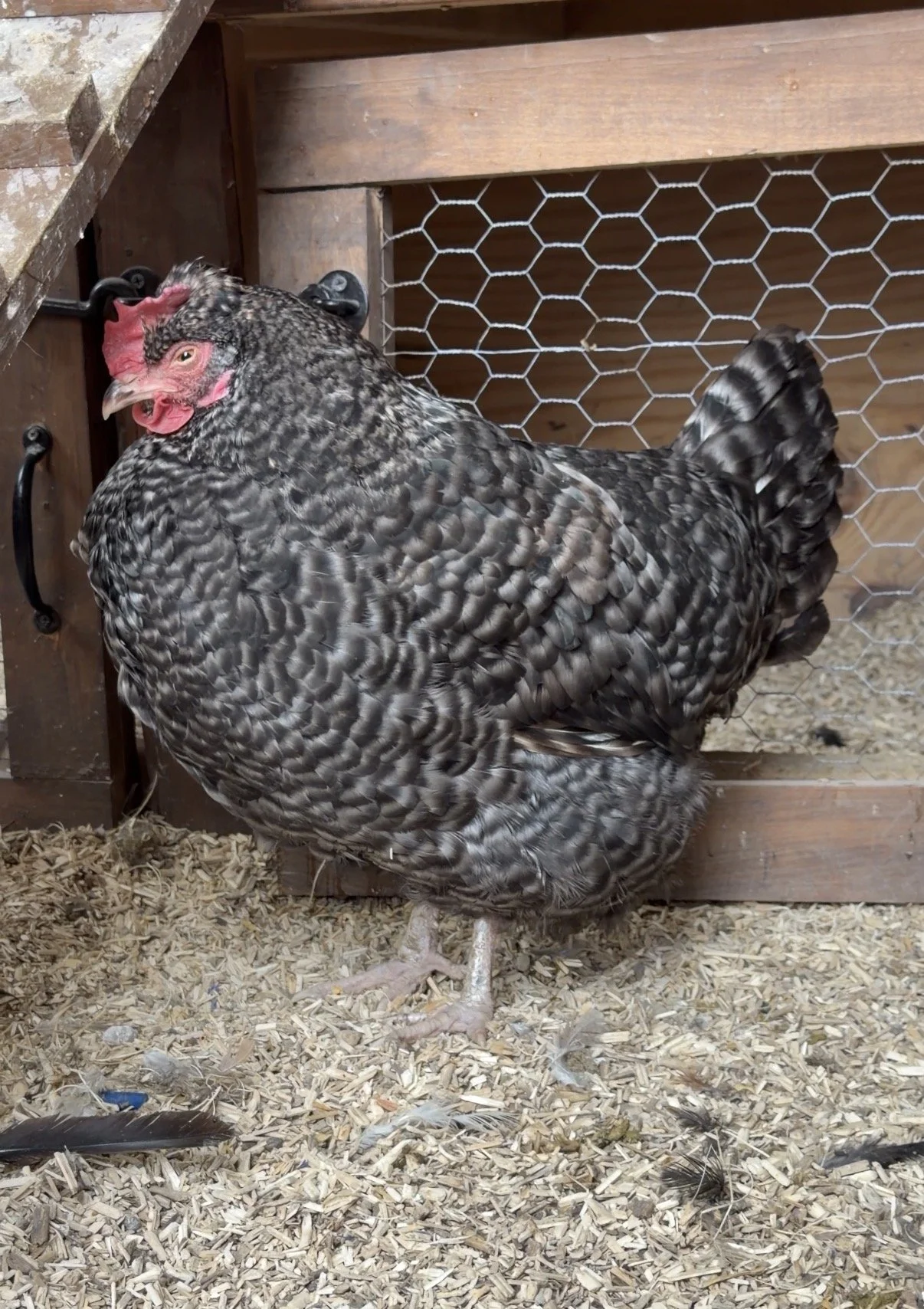
Pocket an hour before she died.
Graphic Images Below
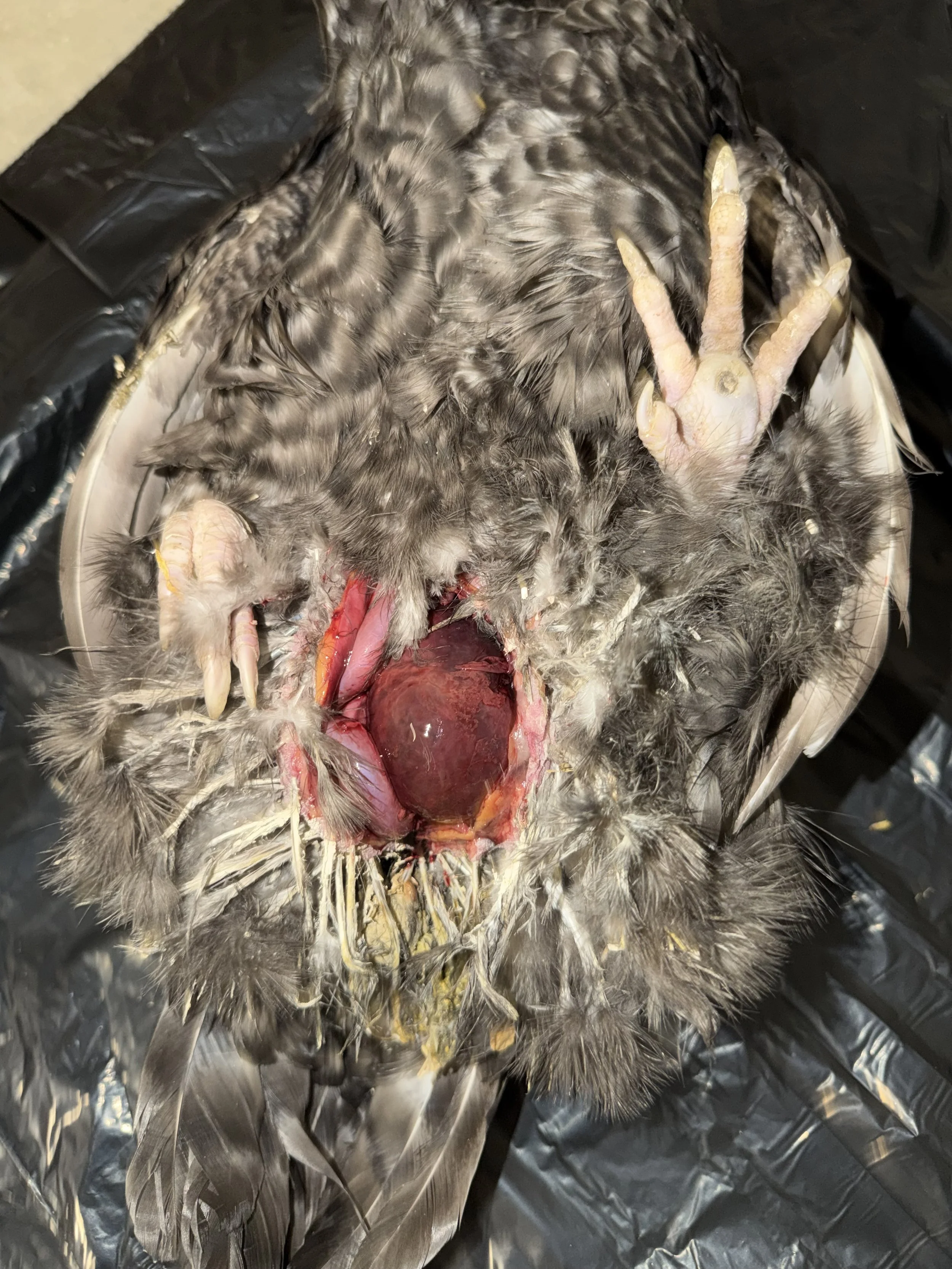
The mass revealed itself as soon as I opened her up.
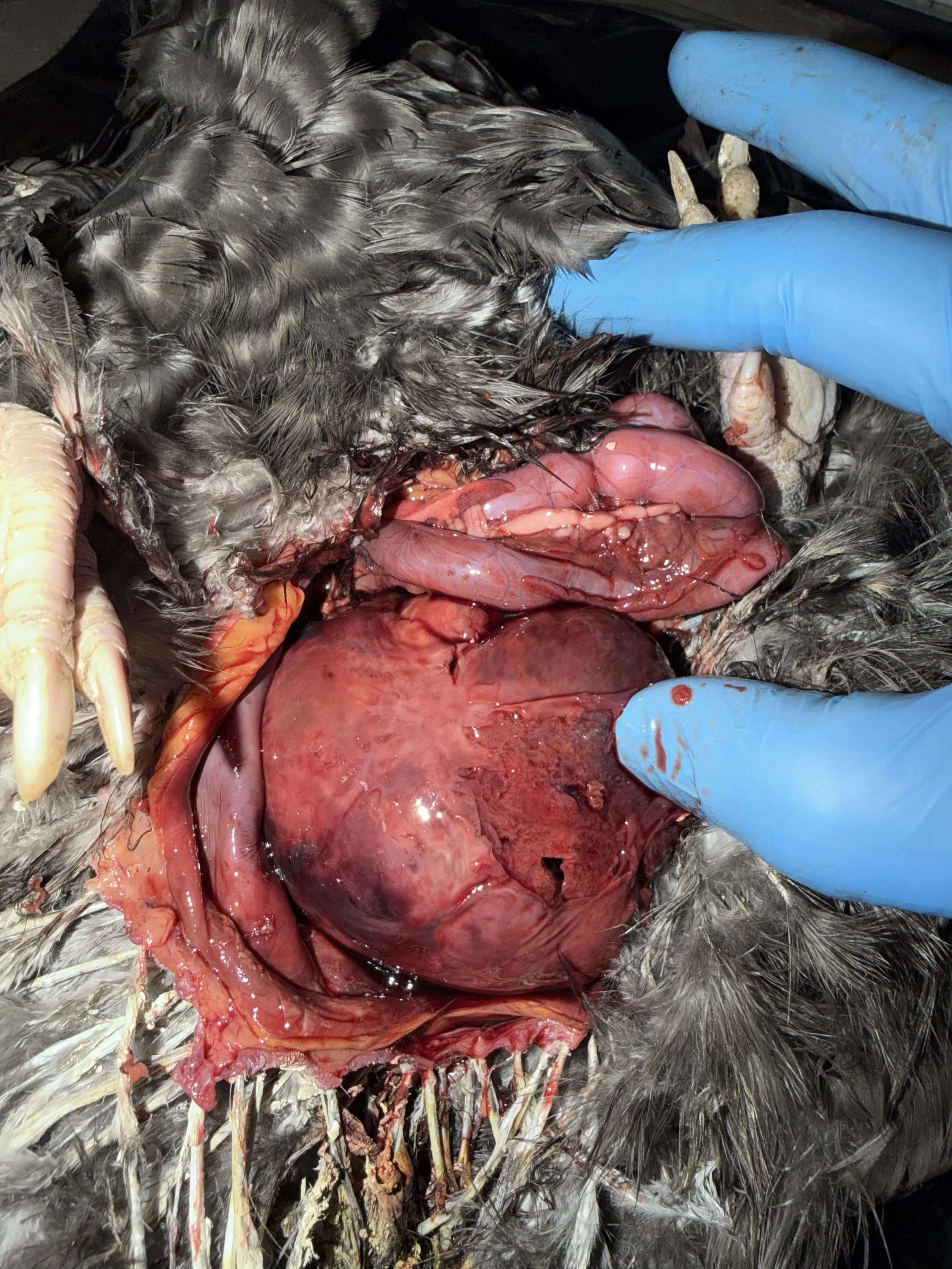
You can only see about half of it in this photo. The whole thing was about the size of a baseball.